
Most businesses come to an animated video service with a script they wrote themselves, a colour palette from their brand guidelines, and a rough idea of what they want it to feel like. That starting point is fine. What often surprises people is how much of the real work happens before a single frame is animated, and how little of it looks like animation at all. Understanding what the process actually involves changes the questions you ask, and the brief you hand over.
On this page
The script you submit is rarely the script that gets made
Most briefs arrive with copy written for a webpage or a sales deck, then pasted into a video outline. Video copy and written copy follow completely different rules. A sentence that reads clearly on a screen often sounds awkward when spoken aloud, and a point that takes two bullet points to explain in text might need fifteen seconds of visual storytelling to land properly in animation.
A professional service will rewrite for the ear. Shorter sentences, a single idea per breath, deliberate pauses built in. It also means cutting, and cutting ruthlessly. The most common script problem is trying to say too much, sixty seconds of animation holds roughly 130 words comfortably, so if your draft runs to 250, something important has to go. Choosing what goes is a creative decision, not a formatting one, and the studio should be making that call with you, not just tidying up your word count.
Storyboarding is where the real decisions get made
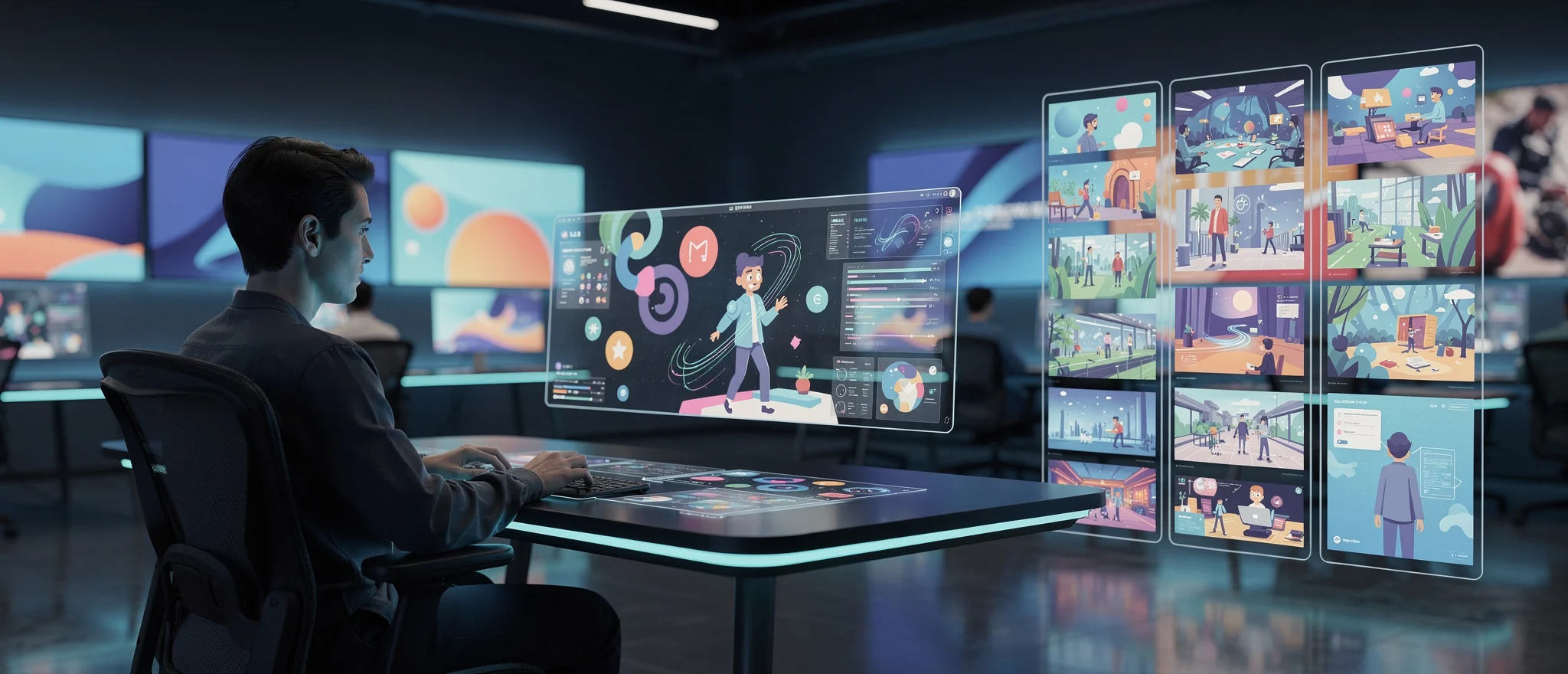
Before any motion, a good animated video service will produce a storyboard covering every scene, every transition, and every piece of on-screen text. This is where you settle questions about pacing and visual hierarchy, and it is far cheaper to change your mind at this stage than after animation has started.
It is also where structural problems in the script come to light. A sequence that seemed logical on paper can look genuinely confusing when you see it laid out frame by frame. We have had clients come to us with scripts they were happy with, only for the storyboard to reveal that a key idea appeared three scenes too late to make sense of what came before it. Fixing that at the storyboard stage costs an afternoon. Fixing it after animation is locked costs much more.
Style is a strategic choice
When a client says they want something “clean and modern”, that description fits about forty different visual styles. Flat 2D illustration, motion typography, character-led animation, isometric graphics, mixed media, and 3D character animation are all technically clean and modern, and they communicate very differently to an audience.
Style choices affect trust signals. A playful, character-driven approach works for consumer-facing brands or products aimed at a general public. Put the same style on a financial services explainer and you risk undermining credibility before the viewer has processed a single message. Getting this right requires understanding who is watching, where the video will live, and what action you want them to take afterwards. A good studio pushes back on style requests that conflict with those goals, even when the client arrives with a firm preference.
Voiceover affects everything downstream
Voiceover is often treated as a finishing detail, selected after the animation is locked. That is the wrong order. The voiceover pace determines how long each scene needs to be, which shapes the edit, which shapes the animation timing. Choosing the voice early, even if that means using a temp track during storyboarding, prevents a lot of rework later.
Accent, tone, and delivery speed all change how a viewer relates to the content. A fast, energetic read suits a product launch. A measured, authoritative tone suits a training film. These are not interchangeable, and treating them as though they are is one of the more avoidable ways a production can go wrong.
What the deliverables should include
A finished animated video is one output. A professional service will typically also supply the assets and formats your distribution needs require. Ask for these before you sign off:
- A square or vertical cut for social media, not just the 16:9 master
- Subtitle files, or captions burned into a social-ready version
- A version without the voiceover baked in, if international versions are likely
- The original project files, or at minimum a clear agreement on who holds them
Source file ownership matters more than most clients realise. If you want to update the video in eighteen months when pricing changes or a product line expands, having the editable files means a small revision rather than a full rebuild.
Where animated video earns its cost
Animation does specific things better than live action. It makes abstract ideas visible, whether that is a software workflow, a supply chain, or a biological process. It removes the logistical cost of location shooting and casting. When done well as part of a broader promotional video production strategy, it holds a viewer’s attention on concepts that a talking head or a product shot cannot convey.
The format is also flexible in ways live action is not. An explainer video built on a solid storyboard can be re-versioned into shorter clips, localised for different markets, or updated without a reshoot. That reusability is a genuine part of the value, provided you planned for it from the start.
The question most briefs never ask
Almost every brief describes what the video should look like. Very few describe what success looks like six months after it goes live. What does a viewer do next? Where does the video sit in a longer decision-making journey? How will you measure whether it worked?
If your studio does not ask those questions before they start drawing, it is worth pausing to consider whether you are buying a video or buying a result.